Connect Shopify Articles, Product Pages and Inquiry Steps
Review one route from a Shopify article to a relevant product or service and contact. Match link promises to answers and preserve the inquiry context.

GRC / Knowledge in practice
Ideas, methods and useful answers for your next stage of growth.
Review one route from a Shopify article to a relevant product or service and contact. Match link promises to answers and preserve the inquiry context.
Shopify API 2026-04 introduces a 128KB write limit for JSON metafields. This article considers the implications for SEO schema, AEO/GEO data and automation, with three ways to adapt your data archi...
A strategic look at B2B Shopify optimization: decision-based SEO and GEO, inquiry conversion, citable content, technical specifications, cross-border trust and platform capabilities for textile and...
An introduction to GEO, structured data and Quote-Magnet content: use verifiable facts, clear specifications and evidence to make product information easier for AI search engines to interpret and c...
A confusion that quietly undermines B2B websitesMost B2B website projects start with a discussion like this: “Our customers are midsize European distributors with 50 to 200 employees. The purchasin...
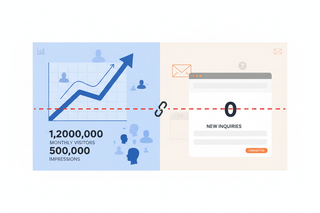
The traffic is there. Where are the inquiries?A packaging company in Guangdong launched an English-language Shopify website in 2023. Six months later, Google Search Console showed 4,200 monthly imp...
A practical SEO/AEO checklist for Shopify websites, covering indexing, structured data, LLMs.txt, supporting evidence, performance and monitoring for visibility in traditional and AI search.
Use Google’s September VideoObject documentation update to check video credits, statistics and viewing-page purpose before changing an export website.
Run one buyer task on a named launch candidate. Compare expected and actual results, link failures to repairs, and preserve untested steps in the acceptance decision.
Compare each model with its own source before sharing product wording. Separate full-set facts, named subsets, individual conditions and unresolved fields.
Record existing URLs, the answers and sources they carry, and proposed destinations. Use a mapping worksheet to review content retention and launch checks.
Assign product facts, buyer wording and operating checks to clear reviewers. Record versions, escalation owners and who authorizes the specific change.
Keep the page link, product reference, use and question together when buyers move to contact. Check what the chosen channel actually carries.
Compare an AI rewrite with its source to find changed numbers, units, conditions and uncertainty. Record the correction and recheck the revised wording.
Keep fields, units, model columns and sources readable on mobile. Compare wrapped text, grouped details and controlled scroll, then test the next step.
Review a daily blog batch by question, answer, reader output and existing owner. Record merge, update, retain, link or hold decisions before assigning dates.
Prepare one page for design with a reader decision, module content, evidence, owners and next step. Keep content, visual and implementation checks distinct.
Map one product to different buyer decisions. Give each brief an answer, evidence and destination, then merge repeated outputs or hold unsupported questions.
Compare existing theme controls, a custom section and a matching app for one page feature. Define editing, page-specific content, dependencies and acceptance.
Separate website activity, contact actions, inquiry receipt and sales qualification. Record what can be linked, what stays unknown and which field to check next.
Review one route from a Shopify article to a relevant product or service and contact. Match link promises to answers and preserve the inquiry context.
Turn reviewed sales-question summaries into a source-backed backlog. Separate follow-ups, private replies, answer gaps and useful page or article proposals.
Plan an application page that connects a use case, selection conditions, product candidates and evidence. Includes a fictional booth example and a page outline.
Use a source-version-to-content list to review a changed product fact across Shopify pages, articles and diagrams, while keeping historical and unlocated references visible.
Plan a B2B Shopify product page around the buyer's use, decision specifications, limitations and evidence. Use a module map and selection-check diagram.
Review one AI operations recommendation through its sources, comparison and reasoning. Use a fictional example and a finding-to-action review card.
Plan Shopify collections and filters around buyer criteria. Use a collection tree and field dictionary to check labels, units, data gaps and theme support.
Define a repeated Shopify task before building its Skill. Use a task card and exception table to clarify inputs, human decisions, outputs and handoffs.
Plan a B2B Shopify homepage around fit, evidence and useful next steps. Use an annotated wireframe to define each section before visual design.
Compare Sidekick, Shopify Flow and an operations Skill Agent by task inputs, prerequisites and review. Use the native route when it meets the brief.
Turn buyer questions into a practical Shopify page plan. Map each decision to a page, supporting evidence and a useful next step before design begins.
A practical Shopify theme handover checklist: locate editing controls, understand shared templates, test routine changes and agree maintenance ownership.
A practical guide to comparing Shopify theme proposals: align the required changes, editing controls, dependencies, acceptance checks and handover.
A practical guide to preparing B2B answers, refining the Inbox agent persona, and connecting chat to a useful sales conversation.
Separate Shopify’s UI extension deployment requirement from the storefront ScriptTag timeline, then prepare a dependency inventory and a practical maintenance handover.
Learn how Shopify Basic can support a B2B inquiry website, from useful product pages and contact routes to quotation inputs, follow-up and implementation limits.
Prepare the context that product and blog work share: a specific buyer decision, source-backed answers and writing rules that preserve your business boundaries.
Separate Skill installation, project preparation and live store verification. Use a small first-use check before attempting a content task.
Start with a clear task, reliable business facts and a result you can inspect. This guide explains the three core Opsy workflows and where to begin.
Read the actual failure before changing the setup. Separate missing inputs, version mismatches, permission failures and results that still need verification.
A useful handover says what actually happened, where the result is saved and what must happen next. Preserve object identities when work continues later.
Use the right evidence for the result being claimed. A local preview, a Shopify draft and a public page answer different verification questions.
A list of 404 URLs is a review queue, not a redirect instruction. Check the source, current response and replacement value before changing a path.
Use the weekly action workflow to turn supported observations and blockers into a small work plan. Define completion before calling the plan an improvement.
A data file becomes useful when its scope is clear. Check what was delivered, which period it covers and which questions the available evidence can answer.
Follow the blog workflow from question evidence to a local preview and a verified draft. Keep topic selection, answer evidence and publishing decisions distinct.
A fictional P-01 example shows how to prepare product facts, review proposed fields and verify a saved draft without confusing draft creation with publication.
When the source material is incomplete, start with a useful gap list. Keep confirmed facts available while routing unanswered questions to the right reviewer.
A product fact sheet connects each proposed claim to its source, conditions and reviewer. Use it before turning scattered materials into customer-facing copy.
See how to prepare one focused Opsy task: organize product facts, write a clear prompt, review a Shopify draft and record what still needs work.
Build a reviewable group-account research record from public annual reports, with source pages, reporting periods, human decisions and clearly bounded LEI cross-checks.
Separate product eligibility, data sharing and checkout location. A merchant guide to B2B-only offers, mixed pricing, Meta limits and channel measurement.
Shopify changed how sessions are measured. Learn how to compare the new baseline, interpret conversion rates and reconcile B2B inquiries or retail sales.